E-mail: info@plymachine.com WhatsApp:+8619553901259

Views: 0 Author: Site Editor Publish Time: 2026-05-19 Origin: Site

Hardwood species such as eucalyptus and oak often present unique challenges during debarking due to thick, stringy bark, knots, and irregular log diameters. These factors can severely impact veneer quality if not properly managed. This article explores why a hydraulic log debarker is particularly well-suited to tackle these issues and improve outcomes for hardwood veneer production.
Hardwood logs differ significantly from softwoods, especially in their bark characteristics, which pose considerable problems in veneer manufacturing. Many hardwood species feature bark that is thick, tough, and stringy, clinging stubbornly to the wood surface. This type of bark is notoriously difficult to remove cleanly and efficiently. Conventional debarking methods often fail to apply sufficient or controlled force, leaving patches of bark intact. Residual bark entering veneer peeling machines can cause increased blade wear because bark often contains grit, dirt, or small stones that dull peeling knives quickly. Additionally, uneven bark removal leads to rough log surfaces that tear the delicate veneer during peeling, and accumulated bark debris can clog machinery, causing unplanned downtime.
In colder regions or during certain seasons, hardwood logs may be harvested frozen or covered with dirt and debris. Frozen bark becomes rigid and brittle, complicating removal and sometimes breaking off unevenly, leaving inconsistent patches. Improper debarking of frozen logs risks damaging the wood beneath with surface checks or splinters. Logs harvested from forest floors or riverbeds often carry dirt trapped between bark layers, which accelerates tool wear and contaminates veneer. These seasonal and environmental factors demand debarkers that can precisely control pressure and feed speed.
Hardwood logs also tend to have irregular shapes and variable diameters due to natural growth patterns, such as knots and burls. This asymmetry means that logs have non-uniform thickness along their length and uneven surfaces that challenge debarking machines' ability to produce a smooth, round profile. Such irregularities can cause veneer sheets to vary in thickness, develop weak spots, or warp, which compromises plywood quality.
Hydraulic log debarkers offer several technical advantages designed specifically to handle the complexities of hardwood logs. Central to their effectiveness is the use of cylinders and pumps that apply variable, controllable pressure during debarking. This adaptability allows operators to fine-tune force based on bark thickness, wood species, and log condition. For instance, thick or frozen bark requires higher pressure to ensure thorough removal, while softer settings protect delicate knots or cracked areas from damage. Adjustable feed rates complement pressure control by matching debarker speed to the peeling line and log characteristics, ensuring smooth and consistent processing.
Another key advantage is precise log rounding. Hydraulic debarkers use hydraulic rollers or claws that apply balanced, even force around the log circumference, rotating it steadily. The machine can adaptively shape logs to compensate for irregular diameters, resulting in a consistently round profile. This precision ensures steady contact between the peeling knife and the log, reducing vibration and uneven cutting forces. Cleaner cuts and less knife wear follow, directly improving veneer quality.
Effective bark and chip removal is also integral to hydraulic debarker design. Most units include integrated chip conveyors or extraction ports that continuously clear bark waste from the machine area, preventing clogging and contamination. This maintains a cleaner operating environment, reducing dust and grit buildup that could damage machinery and improving workplace safety. Additionally, cleaner logs exiting the debarker require less secondary cleaning before peeling.
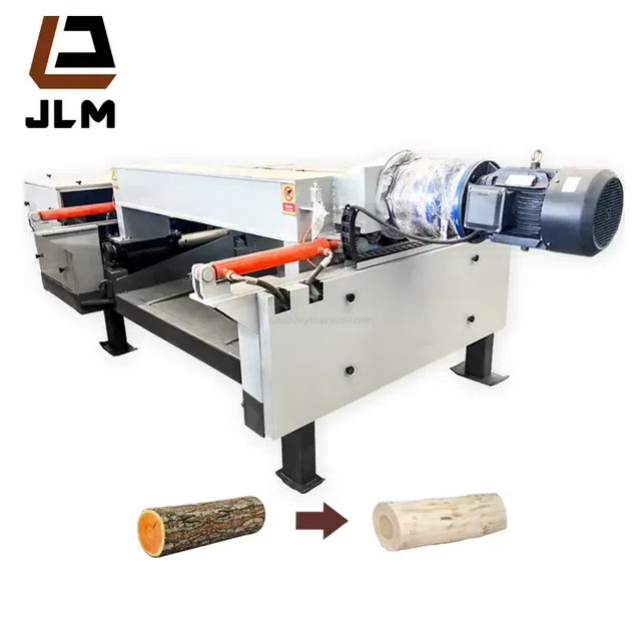
The use of hydraulic log debarkers yields clear and quantifiable improvements in hardwood veneer production. Cleaner, more even debarking results in fewer torn veneer edges and surface defects. This reduces the amount of trimming and sanding needed downstream and enhances the final panel’s aesthetic appeal, which is particularly important for decorative plywood products.
Consistently rounded logs help maintain uniform veneer thickness throughout production. Uniformity improves mechanical strength and lamination quality, reducing the risk of panel warping or delamination. Improved debarking quality also leads to lower reject rates, as fewer defective veneer sheets are produced. This reduction in scrap and rework enhances factory yield and supports sustainability by decreasing raw material waste.
Furthermore, by effectively removing abrasive bark and grit, the hydraulic debarker extends peeling knife life. This decreases maintenance frequency and replacement costs, contributing to higher uptime and improved cost efficiency. The combined impact of these benefits makes hydraulic debarkers a crucial investment for hardwood veneer plants seeking to optimize quality and operational performance.
Before investing in a hydraulic log debarker, buyers should conduct thorough due diligence to verify supplier claims, especially concerning hardwood applications. Requesting wood-species-specific references is essential; suppliers should provide documented case studies or client testimonials involving hardwood species like eucalyptus or oak, demonstrating successful performance.
Site photos and videos of the debarker in operation offer visual evidence of build quality, clean debarking, and effective waste management. Reviewing before-and-after veneer samples processed with and without the supplier’s debarker provides objective proof of quality improvements.
Assessing maintenance records, including service intervals, spare part availability, and average downtime, helps anticipate operational costs and machine reliability. Whenever possible, arrange on-site trials or pilot tests using your actual hardwood logs to evaluate real-world performance before committing to full deployment.
In addition to machine features, operational practices significantly influence hardwood debarking outcomes. Regular calibration of the hydraulic system ensures optimal pressure and feed settings for varying batches of logs. Comprehensive operator training enables staff to quickly adjust machine parameters and respond to changing log conditions, maximizing debarking effectiveness.
Integration with downstream peeling lines is critical. Synchronizing the debarker’s output speed with the peeling lathe prevents bottlenecks and enables smooth, continuous production. Automation and control systems can facilitate this coordination, reducing manual intervention and increasing efficiency.
Preventative maintenance plays a vital role in sustaining machine performance. Routine inspections and timely replacement of wear parts such as blades and liners prevent unexpected breakdowns. Hydraulic system health checks, including monitoring fluid quality and inspecting seals and pumps, maintain reliable operation over the machine’s lifespan.
Hardwood logs pose significant debarking challenges due to their thick, stringy bark, frozen or dirty conditions, and irregular shapes. A hydraulic log debarker offers the precise control, adjustable pressure, and consistent shaping necessary to overcome these issues, resulting in cleaner debarking and higher-quality veneer.
The benefits include fewer torn veneer edges, more uniform thickness, reduced reject rates, and longer peeling knife life—all of which contribute to enhanced productivity and profitability for hardwood veneer manufacturers. Buyers should validate supplier claims with wood-specific references, visual evidence, and pilot trials before full-scale adoption.
Shandong Jinlun Machinery Manufacture Limited Company leverages over a decade of experience in developing hydraulic log debarkers optimized for both hardwood and softwood applications. For expert advice and personalized product consultations, please contact us to discover how our solutions can improve your hardwood debarking process.


