E-mail: info@plymachine.com WhatsApp:+8619553901259

Views: 0 Author: Site Editor Publish Time: 2026-08-18 Origin: Site

Plywood and veneer manufacturing relies on a delicate balance. You must maximize recovery rates. You must also minimize lathe downtime. Feeding raw, unbarked logs directly into a peeling lathe disrupts this balance. It acts as a costly operational mistake. Raw bark holds embedded dirt, rocks, and sand. These abrasive materials instantly accelerate wear on lathe knives. They also compromise your initial sheet quality.
We must position the bark removal phase correctly. It acts as a critical protective asset for your entire veneer peeling line. It is far more than just a simple preparatory tool. Proper log preparation ensures downstream machinery operates at peak efficiency.
This article provides a technical evaluation of pre-peeling debarking. You will learn how bark removal directly impacts veneer quality. We will explore how it extends machinery lifespan. You will also discover actionable ways it improves overall plant profitability. We provide clear criteria for evaluating equipment based on your specific wood species.
Tooling Protection: Removing bark eliminates abrasive materials (embedded dirt, rocks, sand), significantly extending the operational life of peeling lathe knives.
Yield Optimization: Pre-rounding logs during the debarking phase reduces initial spin-out rates and waste during the veneer peeling process.
Throughput Stability: An integrated log debarker prevents unplanned downtime caused by bark jams and frequent blade replacements.
Species Adaptability: Equipment must be matched to wood density and characteristics (e.g., configuring a poplar log debarker requires different roller or rotor settings than hardwood debarkers).
Many plant managers underestimate the financial impact of raw bark. Bypassing bark removal introduces hidden costs across the production floor. These costs compound over time. They quietly degrade your daily profit margins. Let us break down these hidden operational expenses.
Tree bark naturally traps environmental debris. Logs drag through mud, gravel, and sand during harvesting. This debris embeds deeply into the bark layer. Silica and frozen bark act as severe abrasives. They grind against high-speed lathe knives during peeling. Micro-chips form along the blade edge.
This degradation forces frequent blade grinding. You spend unnecessary money on replacement knives. You also lose valuable production hours. Changing a massive lathe knife stops production completely. Protecting these expensive cutting tools should remain a primary operational goal.
Unbarked logs present an uneven surface to the peeling blade. Bark thickness varies drastically along a single log. This irregularity causes uneven initial peeling passes. The lathe blade jumps and stutters.
This mechanical bouncing leads to poor veneer geometry. You get sheets with uneven thickness. Split edges become much more common. Lower quality sheets ultimately downgrade your final plywood panels. It forces you to sell your product at lower market tiers.
Residual bark creates severe downstream friction. Small bark fragments stick to the wet veneer. They travel into the veneer drying process. Bark dries differently than pure sapwood. It creates moisture pockets inside the sheets.
These pockets disrupt the gluing process later. Adhesives cannot bond properly to bark inclusions. This creates dangerous delamination risks in finished panels. Panel structural integrity suffers. Customer claims and product returns often follow.
Bark debris creates massive physical messes. Loose bark clogs peeling lathe chucks. It jams automated waste conveyors. Plant operators must stop the line manually.
Workers shut down the main power.
Maintenance crews manually dig out jammed bark strips.
They clean the sensor optics covered in bark dust.
They restart the line after losing precious uptime.
These repetitive manual interventions waste expensive labor hours. They disrupt the smooth rhythm of continuous manufacturing.
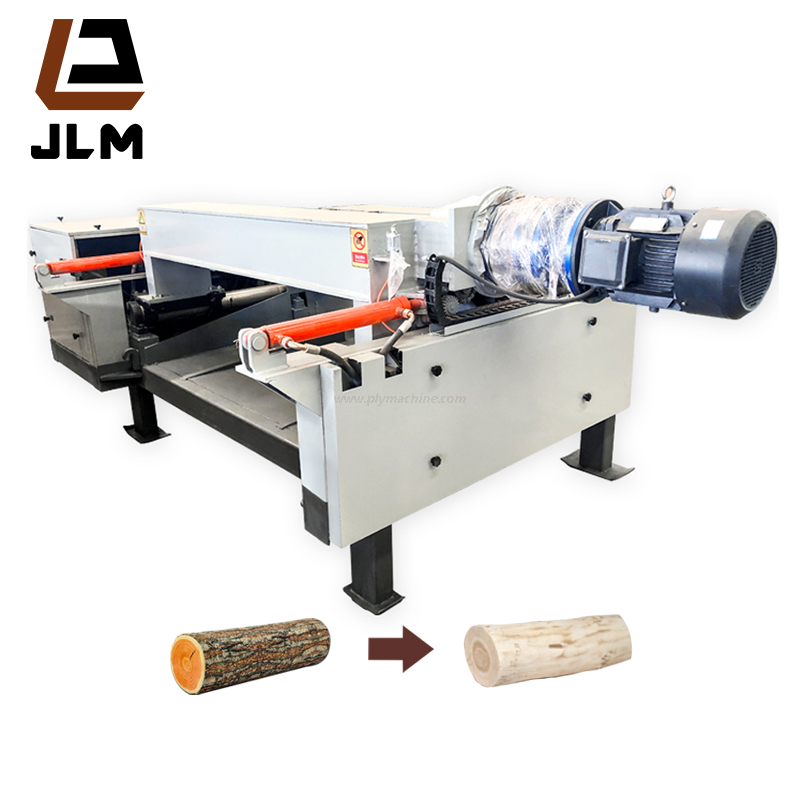
Understanding the mechanical benefits of debarking requires a technical view. A heavy-duty log debarker fundamentally changes the physical state of the log. It prepares the raw material for high-speed processing.
The mechanical action strips rough bark to expose clean sapwood. This exposed surface provides a uniform friction coefficient. The lathe drive rollers grip this clean surface perfectly. Spindle chucks penetrate the wood ends more securely.
Consistent grip prevents the log from slipping during peeling. Slippage ruins veneer sheets instantly. Standardizing the log surface guarantees stable, continuous rotation.
Rotary roller debarkers do more than just remove bark. They physically condition the log shape. The heavy toothed rollers aggressively grind down severe bumps. They lightly round the log before it ever reaches the lathe.
This pre-rounding effect is vital for spindleless lathes. It eases the massive initial shock load on the peeling blade. The lathe spends less time rounding the log. It starts producing continuous, usable veneer much faster.
Modern debarking units feature intelligent automation. They integrate directly into continuous line control systems. Programmable logic controllers (PLCs) match the debarker speed to the lathe speed.
They act as an active accumulator. The debarker holds logs ready. It feeds them exactly when the lathe opens. This synchronization prevents material bottlenecks. It ensures the lathe never waits empty.
Bark removal creates a distinct waste stream early in the process. You gain a strategic operational advantage here. You can isolate the bark waste immediately.
Conveyors route this bark directly to a biomass boiler. It serves as free fuel for your veneer dryers. You avoid mixing dirty bark with high-value clean veneer clippings. Clean clippings sell for higher prices to particleboard manufacturers.
Plant operators face a critical choice when selecting equipment. You must match the technology to your specific log supply. Choosing the wrong machine design creates permanent processing headaches. We will evaluate the two primary technologies used in veneer mills today.
Rotary roller debarkers utilize spinning toothed rollers. The log rolls continuously in a trough. This friction tears the bark away. They handle highly variable log diameters easily. They remain very cost-effective. They inherently pre-round the log. This makes them ideal for spindleless peeling setups.
Rotor debarkers use a spinning ring of blades. The log feeds linearly through the center ring. They offer high-speed, continuous feed rates. They provide highly precise bark removal. However, they require higher initial capital expenditure. They also demand stricter log straightness. Crooked logs often jam inside the rotor ring.
You must map your operational reality to the equipment capabilities. Consider your daily production volume. Measure your average log diameter variance. Evaluate your available factory footprint.
Table 1: Debarker Technology Decision Matrix
Criteria | Rotary Roller Debarker | Rotor (Ring) Debarker |
|---|---|---|
Log Straightness | Handles crooked logs well | Requires very straight logs |
Pre-Rounding Ability | High (excellent for spindleless) | Low (leaves original shape) |
Diameter Variance | High flexibility | Limited by ring size |
Footprint Shape | Wide, parallel layout | Long, linear layout |
Audit your log yard before contacting vendors.
Measure the sweep (curve) of your typical logs.
Match the outfeed height to your lathe infeed deck.
Buying a rotor debarker for heavily bowed timber.
Ignoring the space needed for bark waste conveyors.
Failing to account for winter freezing conditions.
Wood species drastically changes debarking requirements. Hardwoods behave differently than softwoods. Poplar presents very specific challenges. Mills processing poplar need highly specialized equipment configurations.
Poplar logs feature soft, spongy sapwood. They carry extremely high moisture content. Their bark structure is notoriously stringy and fibrous. Poplar bark does not chip or break easily. It peels off in long, tough strips.
These long strips frequently wrap around rotating machine parts. They choke standard roller bearings. They jam traditional waste conveyors. Standard hardwood machines fail quickly when processing poplar.
You must calibrate your equipment specifically for these traits. A dedicated poplar log debarker uses unique tooth profiles. Standard aggressive teeth will tear deeply into soft poplar sapwood. This destroys usable wood volume.
Poplar machines use blunter, wider roller teeth. They apply surface pressure to separate the bark layer. They avoid piercing the soft wood fiber underneath. The roller spacing often changes to allow stringy bark to fall through freely.
Temperature swings heavily impact bark adhesion. Processing poplar changes with the seasons. Winter brings frozen logs. The cambium layer freezes solid. Bark adhesion becomes incredibly strong. You must increase hydraulic pressure to break this bond.
Spring brings sap-heavy logs. The cambium layer becomes slippery and wet. Bark falls off easily. However, the soft sapwood damages easily under high pressure. You must reduce machine pressure during spring months. Adjustable hydraulic controls are absolutely mandatory for poplar processing.
Adding massive machinery to an existing line carries risk. Poor planning causes extended installation delays. It leads to cost overruns. You must approach integration with a strict engineering mindset.
Assess your factory floor space carefully. The debarker is just one component. You must plan the footprint for heavy log decks. You need space for pneumatic kickers. You must route waste conveyors seamlessly.
The material flow must connect perfectly to the lathe. Misaligned centerlines cause log jams. Plan your parallel or linear flow paths using exact CAD measurements.
Debarking generates massive kinetic energy. Heavy logs drop onto steel rollers. The equipment produces severe vibration loads. Standard factory concrete floors will crack under this stress.
You need robust foundation engineering. Deepen the concrete footings under the machine. Install vibration-dampening pads. Secure anchor bolts deep into reinforced concrete. Ignoring foundation work leads to structural failure.
Treat machine vendors as long-term operational partners. Evaluate them beyond their sales brochures. Use these specific lenses:
Spare Parts Availability: Ensure they stock replacement rollers, teeth, and hydraulic pumps locally.
Verifiable Throughput: Demand real-world data matching your specific lathe capacity.
Regulatory Compliance: Check for compliance with local safety guards, dust collection, and noise emission standards.
Take immediate action on your plant floor. Conduct a comprehensive site audit this week. Calculate your exact current costs for lathe knife replacements. Track your manual cleaning downtime. Compare these ongoing losses against new equipment CapEx.
Bark removal remains a non-negotiable step in modern manufacturing. It guarantees high-yield, high-quality veneer production. Feeding raw logs to a lathe simply destroys expensive tooling and ruins product quality.
The upfront investment in proper debarking technology pays off rapidly. You gain massive increases in lathe uptime. You achieve superior veneer thickness consistency. You drastically reduce expensive tooling wear and manual maintenance labor.
Take time to audit your current knife-wear metrics. Evaluate your daily downtime logs. Request detailed equipment specifications tailored strictly to your dominant log species. Protect your downstream assets today.
A: No. Properly sized debarkers actually increase overall line throughput. They act as an automated accumulator. They feed logs to the lathe at an optimized, steady pace. This eliminates waiting times and drastically reduces lathe downtime caused by bark jams and blade changes.
A: Yes, they can handle both. However, this requires adjustable hydraulic pressure. You may also need different tooth profiles. You must reduce pressure for softer woods to prevent fiber damage. You increase pressure and use aggressive teeth to clean hardwoods effectively.
A: Space requirements vary heavily by technology. Roller debarkers require a wider parallel footprint. Rotor debarkers require a long linear space. Proper material handling for infeed decks and outfeed conveyors often demands more floor space than the actual machine itself.
A: It does not perfectly round the log. It provides a highly effective "pre-round". This removes severe surface irregularities and bumps. The peeling lathe still performs the final rounding passes. However, this pre-rounding drastically reduces heavy shock loads on the lathe.