E-mail: info@plymachine.com WhatsApp:+8619553901259

Views: 0 Author: Site Editor Publish Time: 2026-07-29 Origin: Site

Plywood manufacturing is undergoing a critical operational shift. Mills are rapidly moving away from decoupled processing and embracing inline integration. You likely want to eliminate the painful bottleneck between wood peeling and defect clipping. Bridging this specific gap is essential to increasing your daily throughput. Decoupled stations force operators to stack, store, and manually re-feed delicate wood sheets. This outdated approach damages raw materials and drains labor resources.
Connecting these production steps changes everything. An inline setup immediately feeds the continuous wood ribbon directly into the cutting station. While these automated systems drastically reduce manual handling, they require precise mechanical synchronization. They can also introduce compounded downtime risks if you do not specify the equipment correctly. In this guide, we will explore exactly how to evaluate and implement an inline cutting strategy. You will learn the mechanical requirements, synchronization strategies, and maintenance tactics needed to optimize your production floor.
Connecting a peeling machine directly to a slicing unit requires CNC-level speed synchronization to prevent veneer buckling or tearing.
An automatic veneer clipper driven by servo motors is the standard requirement for handling the high-speed output of a modern spindle-less peeler.
ROI is primarily driven by labor reduction and higher usable veneer yield (via optical defect scanning), not just raw cutting speed.
Vendor evaluation must prioritize blade lifecycle, control system compatibility, and available footprint, avoiding systems with proprietary, hard-to-replace electronics.
Decoupled processes rely heavily on intermediate storage systems. Operators manually stack the peeled wood sheets onto pallets. They then transport them across the factory floor using forklifts. This outdated method creates massive operational inefficiencies. The wood sits exposed to ambient factory air. It loses internal moisture rapidly during this wait. The dry edges begin to curl and crack almost immediately. This physical degradation ruins perfectly good material before it ever reaches the drying phase. The labor overhead is equally staggering. You pay workers simply to move material around rather than producing actual value.
Transitioning to an inline setup solves these systemic issues instantly. A continuous ribbon of wood feeds directly from the peeling lathe. It travels straight into the cutting station without hesitation. This constant forward motion maintains structural momentum. It prevents edge curling completely because the wood never rests. Investing in a veneer cross-cutting solution for plywood line streamlines your entire operation. You eliminate the intermediate stacking phase entirely.
The return on investment extends far beyond simple machine speed. Several core drivers justify the upgrade to an inline system:
Forklift Traffic Reduction: You see a measurable decrease in material handling traffic. This lowers fuel consumption and drastically improves factory floor safety.
Higher Recovery Rates: Immediate defect removal happens before the wood begins to dry. This maximizes the volume of usable sheets you extract from each log.
Standardized Feeding: You generate standardized sheet dimensions continuously. These uniform sheets feed perfectly into the subsequent drying or composing phases.
Space Optimization: You eliminate the need for large staging areas previously used for holding stacked, wet wood.
Choosing the correct mechanical design is critical for high-speed continuous peeling. You must compare rotary designs against traditional pneumatic guillotine styles. Guillotine clippers rely on vertical blade strikes. They briefly halt the wood ribbon during every single cut. This stop-and-go action creates severe mechanical stutter. It is completely unacceptable for modern high-speed operations. Modern peeling lines typically run between 40 and 80 meters per minute. They demand absolute, non-stop continuous action.
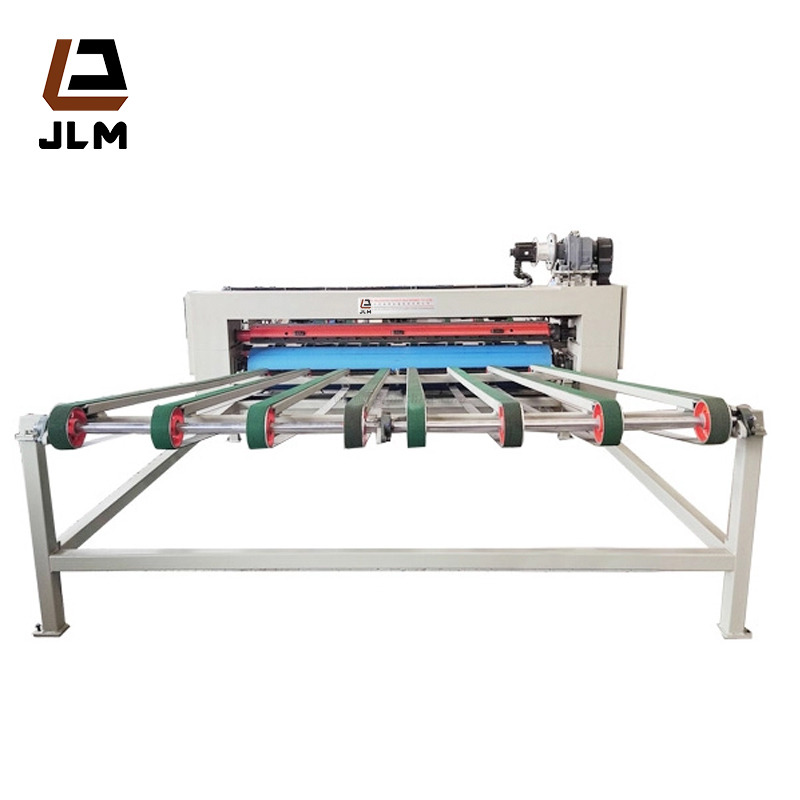
A rotary clipper for veneer utilizes cylinder-mounted blades instead. These heavy cylinders spin continuously in motion. They match the exact forward speed of the moving wood ribbon. This rotating design eliminates the stuttering effect entirely. It allows the line to maintain maximum velocity without tearing the delicate wood fibers.
Mechanical Feature | Rotary Clipper Design | Guillotine Clipper Design |
|---|---|---|
Cutting Motion | Continuous cylinder rotation | Vertical up-and-down strike |
Line Interruption | Zero interruption to wood flow | Brief halt required for every cut |
Optimal Speed Range | 40 - 100 meters per minute | Under 30 meters per minute |
Suitability for Inline | Mandatory for continuous peeling | Not recommended for inline setups |
Blade durability matters immensely in these high-volume setups. You must specify hardened alloy steel blades for your equipment. Proper metallurgy prevents premature dulling when cutting through hard knots. Furthermore, the anvil rollers must support the cut perfectly. A premium Veneer Slicing Machine allows for effortless blade gap adjustments. Poorly adjusted gaps will crush the delicate wood fibers rather than slicing them cleanly. Crushed edges cause severe adhesion failures during the final gluing and pressing stages.
Control systems dictate the ultimate accuracy of the entire machine. You need closed-loop servo motors driving the blade cylinders. Traditional induction motors lack the necessary precision for defect removal. Modern CNC controllers work alongside these servo drives. They execute millisecond-level timing adjustments. This advanced digital control guarantees exact defect clipping and perfect standard sizing every single shift.
Always calibrate your anvil rollers during the first shift of the week. Ensure your maintenance team uses a feeler gauge to verify the blade gap. A gap variance of even a few millimeters will result in jagged cuts and wasted material.
Speed matching requires advanced physics and precise sensor integration. The output speed of a peeling lathe is never constant. As the log diameter steadily decreases, the log must rotate faster to maintain a consistent ribbon feed. A veneer clipper connected to peeling machine must constantly adapt to this wildly variable input. If the cutter runs too fast, it pulls and tears the wood. If it runs too slow, the wood ribbon piles up and buckles.
You need a sophisticated transitional conveyor deck to solve this. This conveyor acts as a vital mechanical bridge between the two distinct units. You must incorporate a buffer zone into this bridge. Most modern factories use a dancer roll or a controlled loop system. The wood ribbon forms a gentle sag in this zone. Ultrasonic sensors monitor the depth of this sag continuously. The loop absorbs micro-fluctuations in line speed safely. It prevents destructive tension buildup across the continuous wood ribbon.
Integrating defect scanning elevates the entire system from simple cutting to intelligent sorting. You mount optical sensors directly above the bridging conveyor. You can also integrate moisture detectors here.
The optical cameras scan the passing wood surface in real time.
The software identifies knots, splits, and severe thickness variations.
The system calculates the precise coordinates of these flaws.
It sends this timing data instantly to the automatic veneer clipper.
The servo motors execute strategic cuts to remove the defects without slowing down.
This seamless communication protocol is the heart of a profitable inline system. It ensures you only send viable, high-quality wood sheets to the dryers.
Inline manufacturing systems carry inherent risks alongside their obvious benefits. You must clearly understand the compounded downtime rule. In older decoupled setups, one broken machine does not stop the other immediately. You can keep peeling logs even if the cutter jams. In an inline system, these two distinct machines are permanently married. A jam in the cutting unit instantly halts the peeling lathe. Your maintenance teams must react much faster to clear faults. Prolonged stops allow the resting wood ribbon to dry out and split.
Evaluate your maintenance footprint early in the planning phase. The transitional conveyor requires dedicated physical floor space. You cannot cram these machines together too tightly. Operators need safe, unhindered clearance for weekly blade changes. Cramped maintenance spaces lead to worker injuries and severely prolonged downtime events. Ensure you leave adequate walkways around the entire synchronization bridge.
Wood species variability dictates your daily machine settings. Different logs behave completely differently under the blade. Hardwoods possess much higher density. They demand higher torque specifications from your servo motors. Softwoods are more pliable but require sharper blade angles to prevent edge tearing. Knots and fluctuating moisture content also impact how the ribbon travels. You must program unique torque profiles into the PLC for different species.
Many factories fail to retrain their staff adequately. Moving from manual labor to machine monitoring is a major operator skill shift. Workers no longer perform heavy lifting. They monitor complex screens instead. They must understand Human-Machine Interface (HMI) troubleshooting. They must know how to perform precise sensor calibration. Failing to provide this technical training results in constant machine faults and frustrated operators.
Choosing an equipment supplier requires strict shortlisting logic. You should demand actual performance guarantees before signing any contracts. Empty-run specifications mean absolutely nothing in the real world. A machine might spin fast while empty, but stall when cutting dense wet wood. Look for vendors who guarantee thickness tolerances under heavy load. Ask them to document specific cuts-per-minute (CPM) metrics during actual production runs.
Parts availability is a critical survival factor for your factory. Avoid manufacturers who use proprietary, locked-down electronics. If their custom board fails, you will face severe supply chain lock-in waiting for overseas shipping. Prioritize standard, globally sourced electrical components instead. Look for well-known programmable logic controllers (PLCs) like Siemens or Mitsubishi. You can replace these standardized parts locally in hours, not weeks.
Demand rigorous integration testing from your chosen vendor. Request a proof-of-concept run before accepting delivery. Ask for case studies showing the exact peeler-clipper pairing you intend to buy. Make sure the vendor has successfully processed your specific target wood species.
Vendor Evaluation Checklist Chart | ||
Evaluation Category | Standard Requirement | Red Flag to Avoid |
|---|---|---|
Control Systems | Siemens, Mitsubishi, or globally available PLCs | Custom, unbranded proprietary motherboards |
Performance Metric | Guaranteed CPM under full wood load | Metrics based solely on empty, no-load spinning |
Blade Metallurgy | Hardened alloy steel (HRC 58-62) | Unspecified or soft carbon steel components |
Software Integration | Open API for third-party moisture scanners | Closed systems unable to accept external sensor data |
Connecting your peeling and cutting units is highly profitable for mid-to-large scale operations. This integration eliminates wasted manual labor and prevents material degradation. You stop paying workers to move wood and start maximizing your raw material yield. However, operational success depends entirely on precision engineering. The synchronization software must be flawless to handle variable log speeds. The mechanical bridging must absorb all physical tension to prevent sheet tearing.
Take actionable steps today before purchasing new equipment. Audit your current peeler’s output variability to understand its speed range. Measure your available factory floor layout accurately to ensure the buffer zone will fit. Gather this exact data before requesting quotes for an inline upgrade. Proper preparation ensures you select a synchronized system engineered for your specific factory conditions.
A: Standard industry speeds for modern continuous rotary clippers range between 60 and 100 meters per minute. The exact maximum feed speed depends heavily on your desired cut length and the capacity of the installed servo motors. Thicker wood sheets may require slightly reduced speeds to maintain cutting accuracy.
A: Yes, you can retrofit existing standalone peelers. However, you must upgrade the peeler's output conveyor to ensure a smooth transition. You will also need to update the Programmable Logic Controller (PLC). The existing peeler PLC must establish a direct communication handshake with the new clipper to synchronize variable speeds.
A: The system relies on high-speed optical cameras and advanced thickness sensors mounted on the bridging conveyor. These sensors scan the passing wood ribbon in real time. They detect knots, splits, and thickness variations. The integrated computer analyzes this data instantly and commands the clipper to remove defective sections precisely.
A: Blade lifespan varies significantly based on the specific wood species and grit inclusions. Processing clean softwoods extends blade life, while dense hardwoods with embedded dirt dull edges rapidly. On average, high-volume shifts require a strict sharpening schedule every few weeks. Regular maintenance prevents fiber crushing and maintains cut quality.