E-mail: info@plymachine.com WhatsApp:+8619553901259

Views: 0 Author: Site Editor Publish Time: 2026-05-26 Origin: Site

Selecting the wrong log debarker can lead to wasted capital expenditure and reduced veneer yield, significantly impacting your plywood production efficiency and profitability. This article provides a step-by-step guide to help procurement engineers and plant owners make informed decisions when buying or retrofitting debarking equipment, turning supplier specifications into clear, actionable criteria.
The first step in choosing the right log debarker is to clearly define your production requirements. This includes assessing the capacity your veneer line needs to handle, the types of wood species processed, and the target veneer quality specifications.
Determine your desired daily or hourly log processing capacity. This informs the size and power requirements of the debarker. For example, plants processing large volumes will require machines capable of high feed rates and continuous operation without overheating or excessive wear.
Identify the species of logs you will debark, such as eucalyptus, pine, or cottonwood, as these vary in bark toughness and wood density. Hardwood species usually require stronger debarking force and more robust blades compared to softwoods.
Log diameter and length distribution directly affect the debarker size you need. If logs typically range up to 4 feet in diameter, then a 4ft log debarker model is suitable. A mismatch here leads to inefficient debarking or frequent jams.
Consider the variability of your raw materials: if your log size and species vary widely, choose a machine with adjustable settings and hydraulic flexibility to handle different batches smoothly.
Understanding the veneer thickness and quality your downstream peeling machines require also helps shape your debarker choice. Uniform log rounding and clean bark removal are critical to meeting these specs consistently.
When comparing debarking machine types, focus strictly on buyer-relevant factors: compatibility with veneer peeling machines, impact on downtime, and production consistency.
Hydraulic debarkers use hydraulic cylinders and rollers to apply adjustable pressure for bark removal and log rounding. This precise control reduces damage to logs and provides consistent feeding to peeling machines.
Peeling Compatibility: Hydraulic systems produce well-rounded logs with clean bark removal, which enhances veneer quality and reduces wear on peeling knives.
Downtime Reduction: The adjustable hydraulic force accommodates different wood species and log sizes, reducing jams and mechanical failures, thus minimizing downtime.
Dual-Feeding Capability: Many hydraulic debarkers can feed two peeling machines simultaneously, increasing overall line productivity.
Spindleless debarkers use rotating drums and fixed knives to remove bark without the need for a central spindle. While they may handle some log shapes well, they generally offer less control over log rounding compared to hydraulic models.
Limitations for Veneer Lines: Less precise shaping can result in inconsistent veneer thickness.
Maintenance: Higher wear on fixed knives can increase downtime.
Ring debarkers use a rotating ring with knives to peel bark off logs. They are often simpler machines and may be less adaptable to varying log sizes.
Compatibility: Less ideal for veneer lines requiring precise log shaping.
Durability: Rings and knives wear quickly with abrasive bark.
Drum debarkers rotate logs inside a drum with knives scraping off bark.
Suitability: Better for rough debarking in pulp or firewood processing, not optimized for veneer production.
Impact on Veneer Quality: Less control over log shape and surface finish.
In summary, for veneer production lines focused on high-quality, consistent veneer and reduced tool wear, hydraulic debarkers offer clear advantages over spindleless, ring, or drum types.
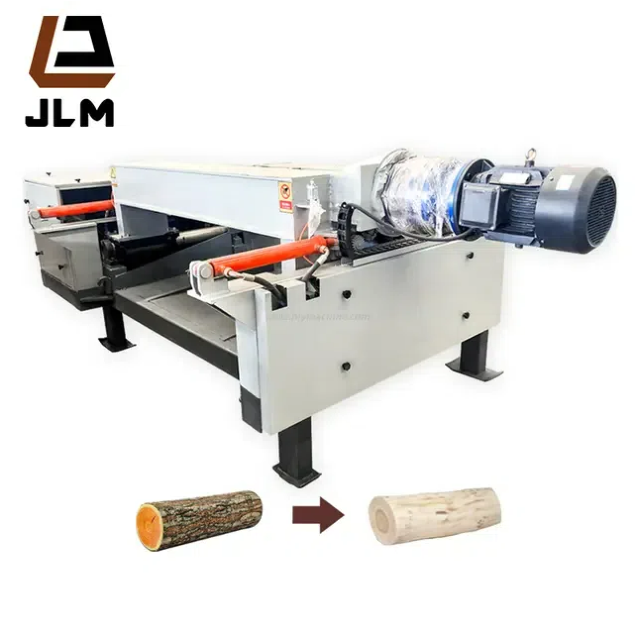
When evaluating hydraulic or other debarkers, distinguish between essential features and those that add convenience but are not critical.
Adjustable Feed Control: Ability to control feed speed and pressure hydraulically to adapt to wood species and log conditions.
Dual-Outlet Support: Capability to feed two veneer peeling machines simultaneously to maximize throughput.
Replaceable Wear Liners and Blades: Easy replacement parts extend machine life and reduce maintenance downtime.
Robust Control Interface: User-friendly digital or touchscreen controls with monitoring and diagnostics.
Reliable Hydraulic System: High-quality pumps, valves, and cylinders designed for continuous heavy-duty operation.
Remote Monitoring and Automation: Integration with plant automation systems for real-time status and alerts.
Noise Reduction Technologies: Enhancements to lower operational noise, improving factory work conditions.
Compact Footprint Designs: Smaller machine size for space-constrained factories.
Prioritize must-have features that directly impact debarking quality, uptime, and line efficiency to ensure your investment pays off.
Efficient factory layout minimizes handling and movement between the debarker and peeling machines, which improves productivity and reduces log damage.
Positioning: Place the debarker as close as possible to the veneer peeling line to avoid excessive log transport.
Log Handling Integration: Automated conveyors or log turners between machines reduce manual labor and cycle time.
Footprint Optimization: Select models designed to fit your factory’s spatial constraints without sacrificing capacity.
Accessibility for Maintenance: Ensure there is adequate space around the debarker for routine inspection and servicing.
A thoughtfully planned installation improves overall line flow and reduces hidden operational costs.
When assessing different suppliers and models, look beyond purchase price to evaluate total cost of ownership.
Maintenance Frequency and Costs: Ask for detailed maintenance schedules, average downtime statistics, and parts replacement intervals.
Labor Savings: Consider how features like dual feeding and automation reduce the need for manual log handling.
Reliability Indicators: Request references or case studies showing uptime and service responsiveness.
Warranty and Service Agreements: Evaluate the terms to ensure protection against unexpected failures and fast repairs.
Remember, a slightly higher upfront cost for a reliable hydraulic debarker often results in lower overall expenses due to fewer breakdowns and longer machine life.
Choosing the right log debarker for your veneer production line requires a clear understanding of your capacity needs, wood species, and veneer quality targets. Hydraulic debarkers stand out as the best choice for modern veneer factories due to their precision, versatility, and ability to support high throughput.
Start by measuring your current production bottlenecks and defining priority features. Then request demos and field references from suppliers to verify machine performance under real conditions.
Shandong Jinlun Machinery Manufacture Limited Company, with over 12 years of experience and a strong patent portfolio, offers hydraulic debarker solutions designed to meet diverse veneer production challenges. For expert advice and personalized support, please contact us today and optimize your veneer line for better efficiency and yield.


