E-mail: info@plymachine.com WhatsApp:+8619553901259

Views: 0 Author: Site Editor Publish Time: 2026-07-15 Origin: Site

Inconsistent veneer thickness directly erodes profit margins through increased glue consumption, wasted raw materials, and downgraded plywood panels. Even minor peeling deviations create a domino effect across your entire production line. Mill operators often struggle to pinpoint the exact cause when quality drops unexpectedly. Moving from mechanical lathes to a CNC system resolves baseline inaccuracies, but true thickness control requires aligning machine parameters, blade geometry, and log conditions. You need a holistic approach to eliminate wavy surfaces and rough peeling. This guide breaks down the mechanics of CNC thickness control, evaluation criteria for upgrading equipment, and operational protocols required to maintain strict tolerances in high-volume production. We will explore how modern systems stabilize output. You will also learn what practical steps keep your production line running perfectly over time.
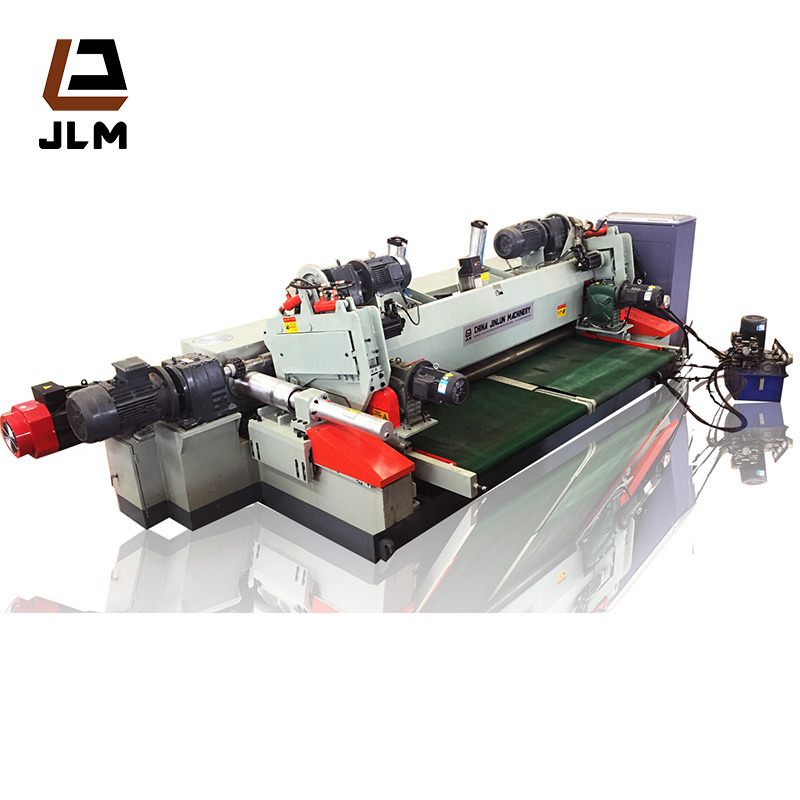
A CNC veneer peeling machine stabilizes thickness by continuously adjusting the feed rate and knife gap via servo motors, compensating for decreasing log diameters in real time.
Peeling accuracy is highly dependent on blade geometry; utilizing a precision knife grinder is non-negotiable for maintaining the micro-bevel required for tight tolerances.
High-yield peeling requires evaluating a machine’s structural rigidity, CNC system reliability, and pressure bar micro-adjustment capabilities.
Even the most advanced CNC systems experience accuracy drift without strict preventative maintenance protocols for sensors, lead screws, and lubrication systems.
Precision directly dictates profitability in modern plywood manufacturing. If you fail to control veneer thickness, material waste compounds rapidly. Over-peeling by merely 0.1mm might seem negligible at first glance. However, it significantly reduces the number of viable sheets you extract from a single log. Across an entire eight-hour shift, this tiny deviation destroys yield. A log intended to produce 50 sheets may only yield 45. Multiply this loss across hundreds of logs daily, and the financial drain becomes enormous.
Downstream processing costs also skyrocket when thickness fluctuates. Rough or uneven veneer demands excessive adhesive during the pressing stage. Glue represents one of the largest variable costs in plywood production. Uneven surfaces create microscopic valleys. These valleys trap excess resin. A smooth, consistently peeled sheet requires a thin, predictable glue layer. Operators must apply thicker glue spreads to compensate for wavy veneer, draining your operating budget quickly.
Thickness irregularities create severe product quality risks. These include:
Weak internal bonds: Uneven glue distribution prevents uniform pressing pressure, leading to hidden voids.
Panel delamination: Sections lacking adequate pressure fail to cure properly, causing layers to separate.
Warping and twisting: Unbalanced veneer layers introduce internal stress into the final plywood board.
Operators historically relied on manual adjustments to counteract changing log densities. A traditional veneer peeling machine lacks the dynamic response required for consistent accuracy. Human reaction times simply cannot match the rotational speed of the lathe. When log hardness changes mid-peel, a manual operator cannot adjust the knife gap fast enough. This reality completely justifies the industry-wide shift toward automated control systems. Digital systems calculate and execute micro-adjustments in milliseconds.
Modern automated lathes eliminate guesswork from wood processing. A high-quality CNC veneer peeling machine uses closed-loop communication to maintain perfection. This process relies heavily on servo motor and lead screw synchronization. As the log spins, its diameter shrinks constantly. The CNC system continuously calculates the exact rotational speed using rotary encoders. It then dynamically adjusts the tool carriage feed rate. The servos turn the lead screws with microscopic precision. This keeps the blade advancing at the perfect speed relative to the shrinking log.
Dynamic knife gap adjustment plays an equally vital role. Automated sensors measure the resistance and cutting forces during operation. They instantly alter the distance between the pressure bar and the peeling knife. If the gap becomes too wide, the wood fibers tear. If it becomes too tight, the log stalls or jams. Dynamic adjustment prevents wavy veneer by maintaining optimal compression just ahead of the blade tip. It adapts instantly to soft spots or knots.
Digital calibration entirely replaces outdated mechanical gears. Traditional lathes required operators to physically swap gear wheels to change peeling thickness. This caused massive downtime. Furthermore, physical gears suffer from mechanical backlash over time. Digital systems eliminate this friction and slop. You input the target thickness into a touch screen, and the servos handle the rest. This shift minimizes wear and tear while boosting output speed.
Advanced thickness monitoring systems close the quality loop. Inline sensors integrate directly into the outfeed conveyor. They detect deviations in real time by scanning the fresh ribbon of wood. If the system detects a variance of 0.05mm, it sends a signal back to the main controller. The controller triggers an automatic micro-adjustment on the fly. This prevents the machine from producing a massive pile of rejected material before anyone notices the error.
System Calibration Comparison
Feature | Mechanical Lathes | CNC Systems |
|---|---|---|
Thickness Change | Manual gear swapping required | Digital input via HMI screen |
Downtime | High (15-30 mins per change) | Near zero (instantaneous) |
Accuracy Control | Prone to gear backlash | Precise closed-loop servos |
Gap Adjustment | Fixed during operation | Dynamic real-time adjustment |
Even the finest software cannot bend the laws of physics. Log conditioning dramatically influences the final outcome. Different wood species react uniquely to the blade. Moisture content and ambient temperature dictate how easily the fibers shear. Hardwoods typically require extensive boiling or steaming to soften the lignin. Softwoods might peel efficiently at lower temperatures. You must adapt your pressure bar settings to match the specific moisture content of your current batch. Failure to condition logs properly causes deep checking and surface splitting.
Blade geometry and edge retention define the physical cut. You must balance the cutting angle and the clearance angle perfectly. If the clearance angle is too shallow, the heel of the blade rubs against the log. This creates immense friction and heat. If the angle is too steep, the blade bites too aggressively, causing chatter marks. The micro-bevel of the knife edge acts as the primary shear point. Maintaining this edge geometry is absolutely critical for continuous production.
This reality highlights the indispensable role of maintenance equipment. Investing in a high-grade knife grinder is strictly mandatory. A dull or unevenly ground blade will override any digital precision you have implemented. If the edge varies by a fraction of a degree across its length, it pulls the wood unevenly. This directly causes severe thickness drift. A precision grinding machine restores the exact factory bevel. It uses flood coolant to prevent the steel from losing its temper during sharpening.
Spindleless dynamics introduce another layer of complexity. Peeling without spindles allows you to process much smaller cores, maximizing yield. However, it relies entirely on roller friction to spin the log. You must manage roller pressure meticulously. If the drive rollers press too hard, they crush the remaining core. If they lack pressure, the core flexes away from the blade in the center. This flexing creates a barrel-shaped core and inconsistent ribbon thickness. Proper hydraulic calibration prevents core flexing entirely.
Procuring new equipment demands careful evaluation of internal components. You cannot base decisions purely on software specifications. Structural rigidity provides the foundation for accurate cutting. High-speed rotation generates massive kinetic energy and vibration. You need heavy-duty cast iron frames or stress-relieved welded frames. These massive structures dampen high-frequency vibrations before they reach the blade carriage. A lightweight frame flexes under heavy loads, causing the blade to bounce slightly. This bouncing translates directly into rough veneer.
Component quality separates premium machines from budget alternatives. You must evaluate the origin and reliability of the moving parts. Look for world-class linear guides and precision ball screws. These determine how smoothly the carriage advances. Additionally, inspect the primary PLC interface. Reputable brands like Siemens, Mitsubishi, or Delta offer proven stability. Cheaper electrical components often suffer from signal delay or thermal overload in harsh mill environments.
Roller wear resistance requires close metallurgical inspection. The drive rollers endure constant friction from wet, gritty bark and wood fibers. Assess the surface hardening treatment applied to these rollers.
Chrome plating: Offers excellent surface hardness and corrosion resistance against wet wood sap.
Deep nitriding: Hardens the steel below the surface, preventing the roller teeth from rounding off.
Induction hardening: Provides exceptional core toughness while keeping the outer teeth brittle-free.
Worn rollers lead to immediate log slippage. Slippage causes the log to rotate slower than the CNC system expects, ruining thickness consistency instantly.
The operator interface dictates daily efficiency. An intuitive Human-Machine Interface (HMI) empowers your workforce. Does the system allow for easy parameter inputs? An operator should easily switch from peeling 2.0mm face veneer to 0.5mm core veneer. They should not require a degree in software engineering. Look for visual touch screens featuring clear icons, diagnostic alarms, and multi-language support. A simplified interface reduces human error during chaotic shift changes.
High-tech equipment requires disciplined care. Managing accuracy drift is a daily responsibility. You must recognize that industrial machines are never "set-and-forget." Mechanical wear happens incrementally. Vibrations slowly loosen retaining bolts. Dust invades electrical cabinets. You need a structured protocol to catch these issues early. Preventative maintenance costs far less than recovering from a major mechanical failure.
Daily and weekly checks keep the baseline secure. You must implement these steps religiously:
Clean all optical and laser sensors: Wood dust blinds inline monitoring systems quickly. Wipe them down at the end of every shift.
Clear debris from lead screws: Bark and chips accumulate on the threads. Use compressed air to blow them clean to prevent servo binding.
Verify automatic lubrication lines: Ensure oil pumps deliver fluid to the linear guides. Dry guides wear out rapidly and destroy accuracy.
Check hydraulic pressure gauges: Verify the roller clamping cylinders maintain the specified PSI to prevent core slippage.
Blade replacement cycles need strict standardization. Do not wait for visible veneer degradation to change the knife. By the time you see fuzzy surfaces, you have already wasted valuable wood. Standardize your knife changes based on operating hours and wood density. For instance, hard species might require a fresh blade every four hours. Soft species might allow eight hours. Document this schedule and adhere to it strictly.
Calibration audits bridge the gap between digital data and physical reality. The touch screen might display 1.5mm, but physical wear can alter the actual output. Quality control personnel must use manual micrometers to verify the physical output. Sample the veneer at the left, center, and right sides of the ribbon. Perform this audit during every shift change. If the physical measurement deviates from the CNC interface data, recalibrate the zero-point of the servo motors immediately.
Consistent veneer thickness relies on rigid machinery, responsive CNC programming, and disciplined blade maintenance. You cannot achieve perfection by upgrading just one part of your workflow. Modern automation eliminates the guesswork, but physical maintenance ensures longevity. Ignoring the physics of peeling or skipping daily lubrication will inevitably degrade your output quality over time.
Upgrading your primary lathe provides the absolute foundation for higher yield. However, you only maximize your return on investment when you pair it with specialized grinding equipment and strict operational protocols. A sharp blade and a calibrated machine work together to minimize glue usage and eliminate material waste entirely.
Take action today by assessing your current waste percentage at the pressing stage. If excessive glue consumption or rejected panels hurt your margins, it is time to upgrade. Contact our technical sales team to specify a machine perfectly tailored to your log species and target thickness requirements.
A: A premium automated lathe typically maintains a tolerance of ±0.05mm to ±0.1mm. This variance depends largely on the wood species, log conditioning, and the target thickness setting. Harder, well-conditioned woods generally allow for tighter tolerances, while softer or unconditioned logs may fluctuate slightly more.
A: You should grind the knife based on shift length and wood hardness, not visual defects. Hardwoods often demand a freshly ground blade every 4 hours. Softwoods can stretch to 8 hours. Utilizing a dedicated grinding machine ensures the precise micro-bevel remains intact for optimal shearing.
A: Yes, but it requires specific parameter changes. You must adjust the cutting angle and modify the pressure bar gap. Softwoods compress differently than hardwoods. The digital interface allows operators to switch these saved profiles quickly, ensuring consistent accuracy across varying wood densities.
A: Wavy output usually stems from physical variables, not software errors. The most common causes include dull knives pulling the fibers, inadequate log conditioning, or worn drive rollers causing micro-slippage. Incorrect pressure bar alignment also allows the wood to flex ahead of the blade.