E-mail: info@plymachine.com WhatsApp:+8619553901259

Views: 0 Author: Site Editor Publish Time: 2026-07-22 Origin: Site

Upgrading or establishing a plywood manufacturing line demands precision right from the start. You must match your primary raw materials, such as log diameter and length, directly to your target end-product panel sizes. Choosing the wrong machine size triggers a cascade of operational headaches. You risk facing high raw material waste, sudden operational bottlenecks, and unnecessary capital expenditure on unused capacity. Without the right alignment, mill efficiency plummets while daily throughput struggles to meet market demand.
This article provides a transparent, technical comparison between 4ft and 8ft models. Plant managers and B2B buyers will discover how to define exact capacity needs and compliance requirements. You will learn how wood characteristics and factory layouts dictate your optimal machinery setup.
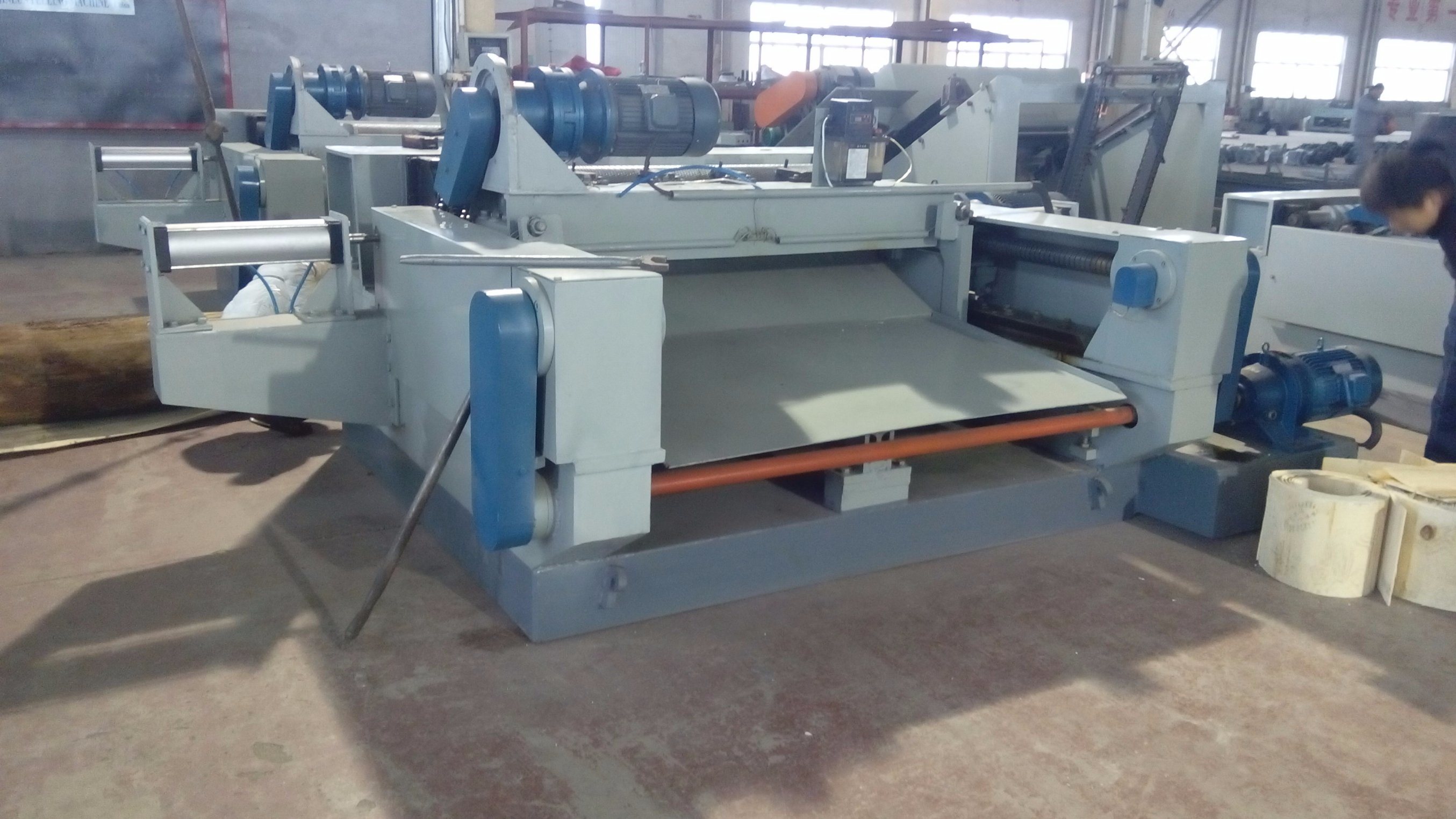
An 8 feet veneer peeling machine is essential for producing continuous face and back veneers for standard 4x8ft plywood panels.
A 4 feet veneer peeling machine excels at processing small-diameter logs and producing core veneers with higher recovery rates.
The final decision depends on your mill's log supply, target plywood dimensions, factory floor space, and desired automation tier (e.g., integrated clippers and stackers).
Hybrid mill setups often utilize both: an 8ft machine for high-grade outer layers and a 4ft machine to maximize yield from residual cores or smaller plantation timber.
Standardized dimensions drive the global panel market. Plywood sheets universally measure 1220x2440mm. This specific standard defines your factory requirements. The outer layers dictate your primary machinery choices. Face and back veneers need absolute perfection. You need a continuous, unblemished 8-foot sheet. Seams on the outer layer degrade panel value. They create structural weaknesses and aesthetic flaws. High-margin architectural panels demand seamless faces.
Inner core layers follow different rules. Core veneers forgive minor imperfections. Operators compose them using smaller 4-foot pieces. Automated joiners stitch these shorter pieces together. This methodology offers immense flexibility. You can optimize cheaper raw materials for the core.
Evaluate your regional timber supply honestly. Old-growth large logs are increasingly rare. Modern mills rely heavily on plantation timber. Fast-growing species like poplar, eucalyptus, and radiata pine dominate. These trees yield significantly smaller log diameters. This biological reality changes equipment economics. You may avoid heavy spindle peelers. Instead, you adopt high-speed spindleless models. A reliable veneer peeling machine must align perfectly with your wood species. Matching equipment to log density maximizes yield. Ignoring this baseline often results in damaged blades and rejected veneer batches.
This machinery tackles shorter logs effortlessly. It handles timber lengths up to roughly 1.3 meters. It accommodates smaller maximum starting diameters. Engineers optimize these units for extreme agility.
Many factory managers deploy a 4 feet veneer peeling machine strategically. Its primary role involves producing inner core layers. Commercial plywood relies heavily on these core sheets. It also excels at processing leftover log cores. Traditional spindle lathes leave substantial wood behind. Spindleless variants rescue this discarded material. They peel residual cores down to minimal diameters. This drastically maximizes wood recovery rates.
Some geographical regions lack large timber. Local forests only supply short, small-diameter logs. These machines make those operations highly profitable. They turn marginal wood into valuable core material.
The operational advantages stand out clearly. These units consume considerably less electrical power. They occupy a much smaller factory footprint. They require a significantly lower initial capital investment. These metrics please budget-conscious plant managers.
However, you must acknowledge the limitations. This equipment cannot produce single-piece 8-foot sheets. It restricts seamless panel production capabilities. You must purchase additional joining machinery. Core composing machines add complexity to the line. A common mistake is assuming you can piece together outer layers. High-grade buyers will reject joined face veneers immediately.
Handling full-length logs requires serious engineering. This machinery processes timber up to 2.6 meters long. Manufacturers construct them using massive, heavy-duty chassis designs. A heavier frame minimizes destructive vibration. Vibration ruins veneer during high-speed, wide-span peeling.
Procuring an 8 feet veneer peeling machine scales your production. It feeds directly into continuous face veneer lines. High-capacity mills prioritize this massive throughput. Seamless panel aesthetics depend on this exact equipment. Film-faced plywood operations consider this mandatory.
You must evaluate specific mechanical criteria. Chassis stability determines your final product quality. Demand heavy-duty cast iron frames. Reinforced steel structures also absorb resonance effectively. A weak frame causes thickness variations. Operators refer to these defects as chatter marks. Chatter marks spread across the 8-foot span. They destroy the grade of your face veneer.
Inspect the roller configurations closely. Compare single friction rollers against double friction setups. Superior rollers grip the log firmly. They dictate peeling thickness uniformity. Consistent pressure yields perfectly flat sheets.
Implementation trade-offs exist for large-scale setups. They consume massive amounts of factory floor space. They require a much higher initial capital budget. Your pre-processing stages must match this scale. You need robust log-debarking stations. Automatic log centering systems become essential. Best practice dictates planning your floor layout six months before machinery delivery.
Compare operational metrics carefully before buying. Wood recovery rates separate the two sizes. Smaller machines grip logs tighter. They peel down to smaller remaining core diameters. This action aggressively reduces overall wood waste. Larger machines inherently leave larger cores behind. They sacrifice a small percentage of yield.
Throughput and linear speed show interesting contrasts. Eight-foot models process double the volume per rotation. They excel in sheer cubic output. However, four-foot models cycle significantly faster. They feature lower rotational mass. This allows quicker acceleration and deceleration.
Thickness precision relies on digital controls. Wide blades demand superior CNC control systems. They must hold uniform thicknesses across large spans. Standard target thicknesses range from 0.5mm to 3.0mm. Smaller machines achieve this uniformity effortlessly. Their shorter blades face less mechanical strain.
Maintenance downtime impacts daily profitability directly. Eight-foot blades require specialized sharpening equipment. Heavy-duty blade grinders become a necessity. Operators face longer calibration times during blade changes. You must train technicians for these specific adjustments.
Below is a quick reference chart outlining essential performance metrics.
Metric Category | 4-Foot Spindleless Models | 8-Foot Heavy-Duty Models |
|---|---|---|
Wood Recovery Rate | Excellent (Peels down to ~30mm cores) | Moderate (Peels down to 40mm-60mm cores) |
Rotational Speed | Higher cycle frequency | Lower frequency, higher volume per rotation |
CNC Precision Strain | Low (Shorter blade span) | High (Requires premium Siemens/Mitsubishi CNC) |
Blade Maintenance | Standard grinders, quick changes | Specialized heavy-duty grinders, longer downtime |
Veneer machinery never operates in a vacuum. You must plan the surrounding infrastructure carefully. Factory layouts dictate your ultimate daily throughput. Assess your downstream equipment matching thoroughly.
Log Debarkers: Ensure the debarker matches the maximum log length. An undersized debarker creates instant bottlenecks.
Rotary Clippers: Coordinate the clipping speed with the peeling output. Mismatched speeds cause veneer jams.
Vacuum Stackers: Install automated stackers to handle continuous sheets. Manual stacking cannot keep pace with high-speed lines.
Calculate the required electrical load meticulously. Heavy-duty equipment demands robust industrial power grids. The massive motors draw significant startup currents. Consult engineers about localized transformer upgrades. Voltage drops will stall your cutting blades.
Safety and compliance govern modern manufacturing. Evaluate all emergency stop mechanisms thoroughly. Install light curtains around operator proximity zones. Verify regional safety certifications like CE or ISO. Large-scale moving machinery presents severe physical risks. Do not compromise on worker protection protocols.
Base your equipment choice strictly on end-product margins. Seamless commercial plywood requires specific tools. Film-faced plywood demands unblemished outer layers. These products make large-scale machinery absolutely mandatory. Optimizing raw material yield changes the equation. Small logs and blockboard production require agility. Start with smaller equipment for these specific goals.
Take definitive action before signing contracts. Request detailed technical data sheets from manufacturers. Scrutinize the core remaining diameter specifications. Verify the motor kilowatt ratings for adequate power. Confirm the origins of the CNC interface. Demand reputable brands like Siemens or Mitsubishi. Clear specifications guarantee a successful factory upgrade.
A: Yes, but only for the inner core layers. Operators must place two 4ft veneers side-by-side. Automated core composing machines join these pieces seamlessly. The continuous face and back layers still require an 8ft machine. You cannot stretch small veneer across outer panels without visible seams.
A: High-end spindleless 8ft machines perform exceptionally well. They typically peel down to a 40mm–60mm core. However, this depends heavily on the wood density. Machine calibration also plays a crucial role. Softer woods might break before reaching this minimum diameter. Hardwoods allow for tighter peeling tolerances.
A: Most modern, efficient mills use a two-step process. They deploy a spindle machine for initial peeling. This handles massive, heavy large-diameter logs safely. Next, they transfer the core to an 8ft spindleless machine. This secondary unit peels the remaining wood down to the minimum viable diameter.