E-mail: info@plymachine.com WhatsApp:+8619553901259

Views: 0 Author: Site Editor Publish Time: 2026-06-27 Origin: Site

Every plywood manufacturing operation relies on a central financial anchor: the peeling process. Raw material log costs heavily dictate overall profitability. This makes peeling precision and maximum yield optimization non-negotiable for modern mills. The choice of peeling technology directly impacts output quality, material waste levels, and downstream processing efficiency. A substandard peeling setup leads to inconsistent thickness. This variance drives up glue consumption and increases panel rejection rates.
We must establish a clear evaluation framework to select the ideal equipment. You will learn how to evaluate specific machine types based on log utilization and operational accuracy. We also explore the distinct mechanical requirements separating core and face veneer production. By understanding these technical variables, you can confidently integrate the right veneer production machinery for plywood plant operations. Strategic selection protects product consistency and maximizes every cubic meter of timber you purchase.
Profitability hinges on log utilization: Reducing the residual core diameter translates directly to higher yield per cubic meter of timber.
Face vs. Core requirements: Face veneers demand high aesthetic quality and tight thickness tolerances (often requiring spindle or hybrid peeling), while core veneers prioritize volume and utilizing small-diameter logs (spindleless).
Automation reduces variance: Integrating peeling into a continuous 4ft/8ft automatic peeling line stabilizes output and reduces labor dependencies.
Servo-driven precision: Modern CNC and servo-motor driven units offer real-time knife gap adjustments, minimizing thickness variance and extending blade life.
Poor peeling performance rapidly erodes mill profitability. When a machine produces veneer with inconsistent thickness, it triggers a cascade of costly manufacturing issues. Thick-and-thin variations create uneven surfaces on the final panel. To compensate for these gaps, operators must apply excessive amounts of adhesive. High glue consumption drastically increases production costs. Furthermore, severe thickness variance leads to weak bonding. This ultimately results in high panel rejection rates during quality control inspections. Investing in a high-precision Veneer Peeling Machine prevents these downstream failures.
We measure peeling success through three primary operational criteria. You must prioritize log utilization rates above all else. This metric evaluates the maximum useable veneer extracted before the machine discards the log core. A smaller residual core means higher volume recovery and less wasted timber. Next, you must enforce strict tolerance control. Achieving ±0.05mm thickness accuracy serves as the mandatory baseline for high-grade plywood. Anything less compromises structural integrity.
Finally, we look at continuous operation capabilities. Plant managers must balance cutting speed with machine stability. Pushing speeds too high on lightweight frames causes vibration and forces unexpected downtime. A balanced, heavy-duty setup maintains high meters-per-minute (m/min) output without sacrificing precision.
Best Practice: Always audit your current average residual core size. Reducing core waste by just 10mm across thousands of logs yields immediate raw material savings.
Modern plywood manufacturing divides peeling into two specialized categories: face veneer and core veneer. Understanding the distinction helps you allocate capital efficiently. The face veneer process focuses heavily on visual grade and structural integrity. These outer layers define the final product's market value. Producing face veneer requires minimal surface roughness and exact thickness consistency. Consequently, operators typically process larger, higher-grade logs for this application. A dedicated face veneer peeling machine ensures delicate handling and superior aesthetic output.
Conversely, the core veneer process focuses on maximum volume recovery. Core layers sit hidden inside the plywood panel. Visual defects matter less here. This process extracts usable material from smaller logs or from the residual cores left behind after face peeling. A robust core veneer peeling machine must handle irregular wood grains, knots, and varying densities without stalling.
Attempting to use a one-size-fits-all approach rarely succeeds. Running high-grade face logs through aggressive core peelers damages the delicate surface. Conversely, running small, knotty logs through sensitive face peeling equipment causes excessive wear. This is why most modern plywood plants utilize a staggered setup. They deploy both machine types in sequence. This strategy protects tight tolerances for premium panels while squeezing every possible cubic centimeter of yield from lower-grade timber.
Choosing between spindle and spindleless mechanisms represents a critical engineering decision. Spindle veneer peeling machines rely on mechanical chucks. These chucks physically grip the log at both ends to rotate it against the cutting knife. This design excels at processing large diameter logs. It provides exceptional stability, making it ideal for high-quality face veneers. However, spindle machines possess a significant limitation. The mechanical chucks require physical space to maintain their grip. Once the log diameter shrinks to the size of the chucks, peeling must stop. This leaves a relatively large residual log core, generating higher material waste.
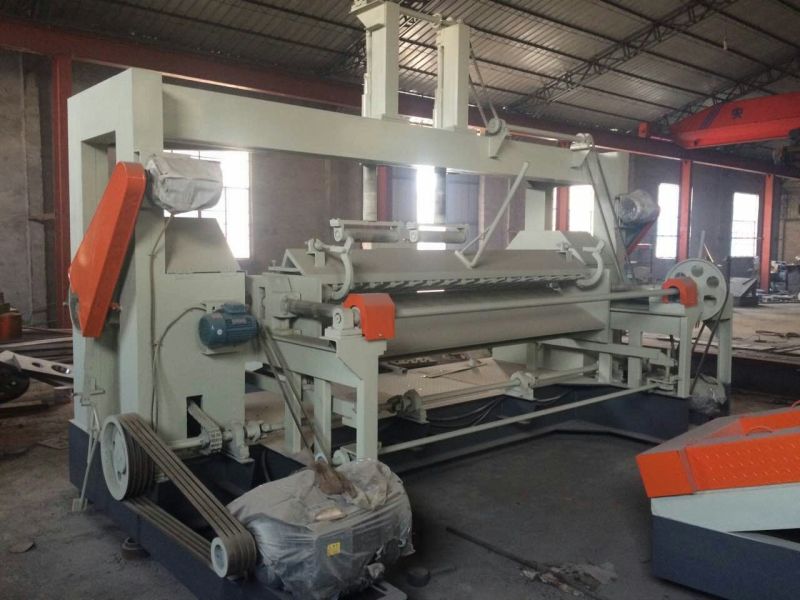
Spindleless veneer peeling machines operate on a completely different mechanical principle. Instead of end-chucks, this equipment uses driven rollers. These rollers rotate the log and simultaneously feed it directly against the knife. This mechanism handles small diameter logs and plantation timber exceptionally well. It serves as the primary tool for maximizing core veneer extraction. The main efficiency point lies in its log utilization. Because there are no chucks in the way, spindleless models can peel logs down to extremely small residual diameters. Many units achieve a 30mm to 40mm remaining core. This capability dramatically improves material utilization and raw material ROI.
Feature | Spindle Peeling Machine | Spindleless Peeling Machine |
|---|---|---|
Grip Mechanism | Mechanical chucks at log ends | Driven friction rollers |
Primary Application | High-quality face veneers | High-volume core veneers |
Optimal Log Size | Large diameter logs | Small diameter / plantation timber |
Residual Core Size | Large (limited by chuck diameter) | Very small (often 30mm–40mm) |
Material Yield | Moderate (higher waste) | Maximum (highly efficient) |
Drive systems dictate the baseline accuracy of your peeling operation. Buyers should always mandate high-torque servo motors over traditional mechanical gearboxes. Older gearbox systems struggle with lag and mechanical backlash. This creates micro-variations in veneer thickness. Servo motors eliminate this problem. They deliver instant, precise control over feed rates and cutting pressures. They respond to resistance changes in milliseconds, ensuring perfectly uniform veneer sheets.
Speed adjustable mechanisms represent another non-negotiable feature. Timber is not a uniform material. Plant operators process various wood species, shifting from softwoods to dense hardwoods daily. Furthermore, the physical dynamics of a log change as its diameter decreases during peeling. Variable peeling speeds allow operators to accommodate these fluctuations in real-time. Slowing down for hard knots prevents blade damage, while speeding up on soft sections maximizes daily throughput.
Modern CNC control systems tie these mechanical components together. As the log diameter shrinks, the optimal cutting angle changes. If the angle remains static, the knife begins to bounce against the wood. This causes veneer "chatter"—a visible surface rippling that ruins panel aesthetics and weakens glue bonds. CNC systems execute automated knife angle adjustments on the fly. They calculate the shrinking diameter and pivot the blade seamlessly. This eliminates chatter and maintains a smooth, continuous ribbon of wood.
Common Mistake: Relying on manual knife angle adjustments slows down production and introduces human error. Always opt for CNC-driven dynamic adjustments to maintain surface quality.
Selecting the right equipment size depends entirely on your target market. Mills generally choose between 4ft and 8ft configurations. Plants typically deploy 4ft machines for short-core production. They handle smaller timber effectively and fit well into operations focused on specialized or smaller-scale panels. Conversely, 8ft machines represent the global standard for structural plywood. They produce full-sized panel face and back veneers. Purchasing an 8ft system provides greater product flexibility, though it requires a larger factory footprint.
Standalone machines offer limited value without proper line integration. You must assess how the peeler syncs with the rest of your facility. A fully integrated 4ft/8ft automatic peeling line connects directly to upstream log debarkers. Clean logs feed continuously into the peeler without manual loading delays. Downstream, the peeler must communicate seamlessly with rotary clippers and automatic stackers. This continuous flow reduces labor dependencies and eliminates material pile-ups on the factory floor.
You must also carefully monitor throughput versus bottlenecks. The cutting speed of your peeler must align with the processing capacity of your veneer dryer. If the peeler pushes out 80 m/min but the dryer can only handle 40 m/min, the line will stall. Wet veneer will accumulate, leading to moisture damage and operational chaos. Always spec your peeling line output to match your most restrictive downstream bottleneck.
Purchasing heavy machinery carries specific implementation risks. You must evaluate vibration and structural rigidity before making a decision. We strongly warn against lightweight machine frames. Fabricated steel weight cannot dampen operational forces effectively. When processing heavy logs at high speeds, light frames vibrate violently. This severe vibration leads directly to uneven veneer thickness and accelerates bearing wear. Heavy-duty cast iron frames absorb these forces, ensuring smooth operation and protecting sensitive servo components.
You must also plan for the maintenance of wear parts. Heavy-duty operational cycles require strict upkeep. Knife sharpening intervals dictate your daily downtime schedule. Dull blades crush wood fibers rather than slicing them, destroying veneer quality. Roller wear and precise lubrication requirements also demand attention. Neglecting to grease heavy-load bearings leads to catastrophic machine failure and weeks of lost production.
Follow a strict shortlisting logic when evaluating vendors. Use this systematic approach to narrow down your options:
Define raw material parameters: Document your primary wood species, average log diameter, and typical moisture condition.
Define end-product requirements: Outline your acceptable thickness range and determine your exact face-to-core production ratio.
Request operational demonstrations: Demand live or video tests on logs matching your species. Focus specifically on the residual core size and thickness consistency achieved at maximum stated speeds.
Buying a veneer peeling system is an exercise in balancing raw material constraints with end-product quality goals. Precision cutting prevents wasted timber and reduces excessive glue consumption. When you pair the right mechanical setup with your specific log types, you guarantee a more stable, predictable manufacturing output.
Procurement teams must prioritize CNC precision and heavy-duty frame construction over baseline machine costs. Cheaper, lightweight models generate inconsistent veneer and suffer frequent breakdowns. High-quality systems extract more usable wood per log. These raw material savings will quickly offset capital expenditure, driving long-term mill profitability.
Audit your current log diameter and species to choose between spindle and spindleless mechanics.
Prioritize CNC-controlled knife adjustments to eliminate veneer chatter and thickness variance.
Match peeler throughput strictly to your existing dryer capacity to prevent bottlenecks.
Consult with engineering teams to spec a tailored peeling line layout based on your specific timber supply.
A: Most high-quality spindleless machines can reduce a log down to a 30mm–40mm core, depending on the wood density and machine calibration, significantly increasing total yield.
A: While technically possible on high-end, variable-speed spindleless machines, it is highly inefficient. Production plants usually run dedicated machines to optimize log utilization and protect the tighter tolerances required for face veneer.
A: Servo motors provide instantaneous, micro-millimeter adjustments to the knife gap and feed rate. This maintains consistent veneer thickness even as the log shrinks and rotational physics change.