E-mail: info@plymachine.com WhatsApp:+8619553901259

Views: 0 Author: Site Editor Publish Time: 2025-09-16 Origin: Site

Selecting the right veneer peeling line is a crucial investment decision for any plywood factory. The correct line not only affects daily production capacity but also impacts product quality and overall profitability. In this guide, we will walk through the essential factors to consider when choosing a veneer peeling line to ensure your operation runs efficiently and meets business goals. Shandong Jinlun Machinery, with over a decade of expertise in veneer peeling machines, is here to help you make an informed choice.
The size of logs you intend to process is a primary factor in selecting the appropriate veneer peeling line. Logs with larger diameters and longer lengths usually require different machinery compared to smaller logs. For example, spindle veneer lathes are often preferred for logs with a smaller core diameter, offering precise peeling suitable for fine veneer. In contrast, spindleless veneer lathes handle larger logs more efficiently, providing higher throughput but may require adjustments in speed and cutting methods.
Understanding the relationship between log size and machine type ensures that you select a veneer lathe machine capable of maximizing yield while maintaining veneer quality. Using an ill-suited machine for your logs may lead to increased wood waste, frequent machine jams, or reduced veneer thickness consistency, all of which can affect your plywood factory's output and profit margins.
Different wood species, such as hardwood versus softwood, demand specific cutter types and peeling speeds. Hardwood generally requires slower cutting speeds and sharper, more durable cutters to ensure veneer quality without excessive wear. Softwood, being less dense, allows faster peeling but may need adjustments in feeding systems to avoid damage.
Additionally, certain exotic or specialty wood species may require customized peeling parameters or specialized veneer slicing machines to handle unique grain structures or densities. Factoring in your primary raw material species helps define cutter selection, peeling speed, and feeding system requirements, optimizing the lifespan of your equipment and the quality of your veneer sheets.
Every plywood factory operates under different production targets, ranging from small pilot runs to full-scale eight-hour shifts. The veneer peeling line you select should align with your intended throughput. For instance, a small-scale operation might only require a basic veneer rotary cutting machine capable of handling limited logs per hour, while larger factories need robust lines designed for continuous high-volume output.
Planning with a 10-20% capacity buffer is a practical approach to avoid bottlenecks and unexpected production slowdowns. This headroom accommodates fluctuations in log supply, machine maintenance, or labor availability, ensuring your veneer peeling line maintains steady productivity without sacrificing quality.
Accurate capacity planning also allows for better financial forecasting and helps avoid unnecessary capital expenditure on oversized lines. By understanding your current and future production goals, you can select a veneer peeling line that offers scalability, allowing upgrades or expansions as your factory grows.
Different classes of veneer peeling machines suit varying production scales. Entry-level machines may suffice for medium-capacity factories focusing on manual or semi-automatic operation. High-end, fully automatic veneer lathe machines with integrated log feeding systems and automatic stacking modules are best suited for high-volume, continuous production environments.
Moreover, the choice of machine class impacts energy consumption, maintenance frequency, and labor requirements. Fully automatic lines, while often requiring a higher initial investment, tend to offer better long-term cost savings through reduced labor costs and improved material utilization. Selecting the right class balances upfront investment with operational efficiency.
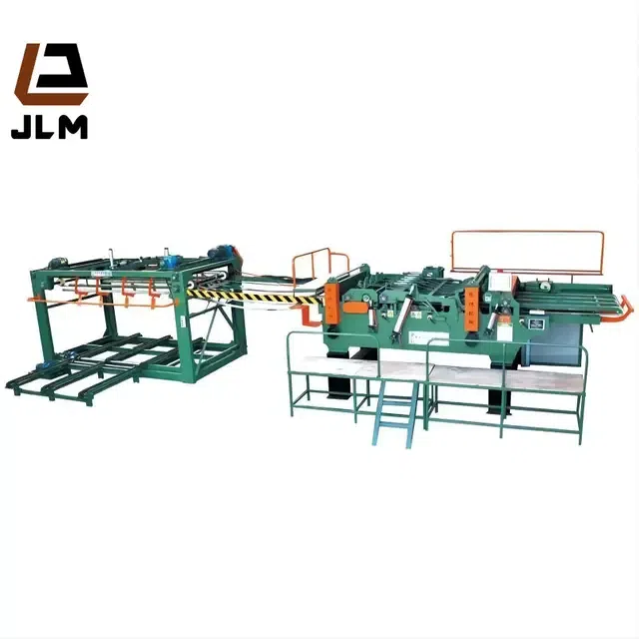
Veneer peeling lines range from manual setups requiring multiple operators to fully automatic systems needing minimal supervision. The labor model you choose depends on factors such as workforce availability, training costs, and your production complexity.
Manual veneer peeling machines may fit smaller factories with skilled labor but risk lower efficiency and higher error rates. Semi-automatic lines balance operator input and automation, often including automatic log feeding but manual quality control. Fully automatic veneer peeling lines integrate log centering, clipping, peeling, and stacking, requiring fewer operators and providing consistent output quality.
Automation level also impacts safety. Fully automated veneer peeling lines reduce direct human contact with moving parts, lowering workplace accident risks. For factories prioritizing worker safety and compliance with modern standards, investing in advanced automation is increasingly important.
Key automation features to look for include log feeding systems that smoothly load logs into the peeling machine, precise centering mechanisms to reduce wood waste, and automatic clipping or stacking modules to speed up downstream processing. These modules not only increase efficiency but also reduce labor costs and minimize human error.
Furthermore, advanced control systems with real-time monitoring can optimize peeling parameters automatically based on log characteristics, further enhancing product consistency. Selecting a veneer peeling line with modular automation allows you to customize the system to your specific operational needs and budget.
Maintaining uniform veneer thickness is critical for plywood quality and dryer efficiency. Advanced thickness control and grading systems within the veneer peeling line help reduce rework and drying times by delivering consistent veneer sheets. These systems allow real-time adjustments, improving yield and minimizing waste.
Irregular veneer thickness can lead to problems in pressing and lamination stages, causing weak bonding or product defects. Incorporating quality control technology directly into the veneer peeling line reduces these risks and enhances your product's market competitiveness.
The veneer peeling line must be well synchronized with downstream equipment like dryers and presses. Mismatched speeds cause bottlenecks, leading to accumulation or starvation of veneer sheets in later stages, impacting overall throughput and product quality.
Choosing a veneer peeling line that interfaces seamlessly with your drying and pressing systems enhances workflow efficiency and reduces energy consumption. Integrated systems also facilitate easier troubleshooting and maintenance, keeping your production line running smoothly.
Reliable service support and spare parts availability are vital for maintaining production uptime. Lead times for essential spares, a local service network, and comprehensive operator training reduce downtime and extend equipment life.
Shandong Jinlun Machinery emphasizes timely spare parts delivery and after-sales support to ensure your veneer peeling line remains operational with minimal interruptions. Investing in equipment backed by strong service guarantees protects your factory from costly unexpected stoppages.
A practical ROI checklist includes assessing labor saved through automation, additional yield obtained via precise peeling, and reduction in rejects thanks to quality control modules. These factors directly contribute to lowering operating costs and increasing profit margins over the equipment's lifespan.
Additionally, energy efficiency and maintenance costs are key components of ROI. Modern veneer peeling lines designed with energy-saving motors and modular components reduce operational expenses. Factoring in total cost of ownership rather than just initial price helps make smarter purchasing decisions aligned with your factory’s financial goals.
Choosing the right veneer peeling line for your plywood factory involves careful evaluation of your raw materials, production capacity goals, automation preferences, quality control needs, and service support. Shandong Jinlun Machinery, with over 12 years of experience and more than 60 national patents, offers advanced veneer peeling machines designed to optimize your production and profitability. Our plywood veneer peeling line solutions integrate key equipment such as log debarkers, veneer peeling machines, log conveyors, and automatic veneer stackers, helping your factory achieve higher efficiency with lower labor costs. Contact us today to learn how our veneer peeling line can perfectly match your factory’s requirements and elevate your production capabilities.


